


Published: July 3, 2026
Simple question: when was the last time you sat still and did absolutely nothing for 20 minutes while your body got healthier?
Probably never. Because most health advice requires effort—exercise, meal prep, meditation practice, supplement routines. All valuable, but all demanding time, energy, and consistency most people struggle with.
Here's something different: what if you could improve cardiovascular function, reduce dementia risk, lower inflammation, and enhance your body's stress resilience simply by exposing your body to heat for 15-20 minutes several times a week?
Not metaphorically. Literally.
Whether it's spending time outside during warm weather, sitting in a sauna, or soaking in a hot bath, deliberate heat exposure produces physiological changes that mirror moderate-intensity exercise, protect brain health through mechanisms that are hard to replicate elsewhere, and offer benefits that are measurable, reproducible, and accessible to almost anyone.
The science on heat therapy has exploded in the last few years. Whether you live in a warm climate or need to create heat artificially, you have access to one of the most underutilized health tools available.
Why Does Heat Feel Like Medicine? (Because It Actually Is)
If you live somewhere with warm summers—or in a consistently warm climate—you already have access to natural heat therapy. You're just probably not thinking about it that way.
Here's what most people miss: warmth from summer sun does more than boost vitamin D. When UVA rays hit your skin, they release stored nitric oxide from your skin's layers directly into your bloodstream. This causes blood vessels to dilate and blood pressure to drop—completely independent of any vitamin D production. That relaxed, loose feeling you get sitting in pleasant warmth? That's your cardiovascular system responding therapeutically.
Your body naturally adapts to seasonal heat through sweating and thermoregulation, providing some of the same cardiovascular conditioning as deliberate heat therapy.

Think of it as passive training—your heart rate elevates slightly, blood vessels dilate, and your body works to maintain comfortable core temperature. Over time, these repeated mild stressors create adaptation.
But here's the problem: most people don't live in consistently warm climates. And even if you do, winter arrives. So what happens when you can't access natural heat exposure?
That's where controlled heat therapy comes in.
The 20-Year Finnish Study on Sauna and Heart Health: Key Findings
In 2015, researchers published results from a study that tracked 2,315 Finnish men for over two decades. Finland—not exactly known for warm weather—has a deep cultural practice of regular sauna use. The researchers wanted to know: does it actually affect long-term health?
The results were stunning.
Men who used a sauna 4-7 times per week had a 63% lower risk of sudden cardiac death, a 48% lower risk of fatal coronary heart disease, and a 40% lower risk of all-cause mortality compared to men who used a sauna only once weekly. Sessions longer than 19 minutes cut sudden cardiac death risk by 52% compared to sessions under 11 minutes.
This wasn't a small effect. This was a dramatic, dose-dependent relationship between heat exposure frequency and living longer.
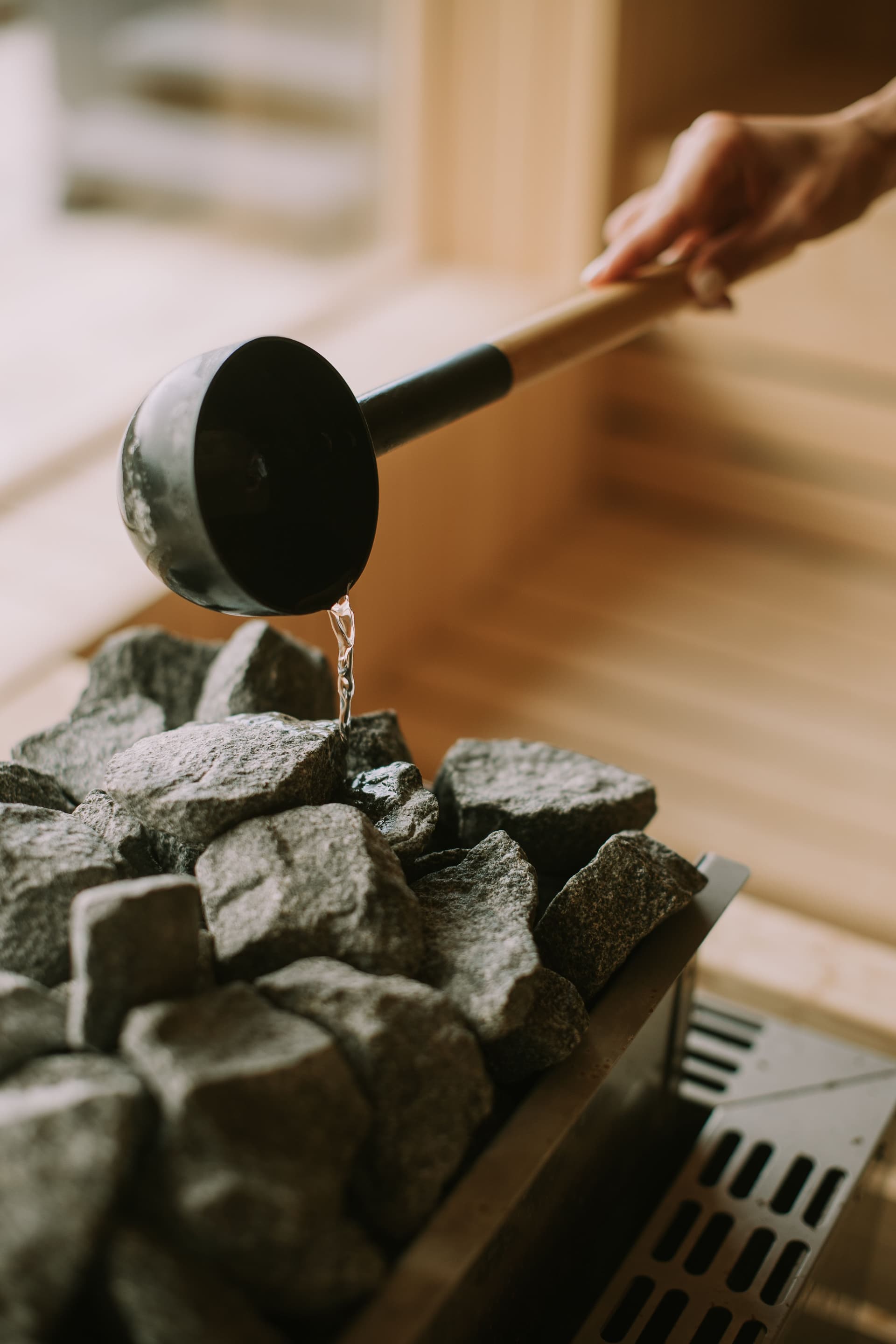
The same research team later extended their findings to include women, confirming that frequent sauna use reduced cardiovascular mortality in both sexes. A comprehensive review in Mayo Clinic Proceedings found that regular sauna users showed 46% lower hypertension incidence, 61% lower stroke risk, and—perhaps most remarkably—66% lower dementia and 65% lower Alzheimer's disease.
The Finns figured out how to get heat therapy benefits without relying on weather. And the science explains exactly why it works.
How Does Sitting in Heat Actually Improve Your Heart?
Here's the key: heat exposure creates physiological responses remarkably similar to moderate aerobic exercise—increased heart rate, enhanced blood flow, sweating, metabolic activation—without requiring movement.
When your body is exposed to heat, several things happen simultaneously: Your core temperature rises, triggering thermoregulatory responses. Your heart rate increases, often to 100-150 beats per minute in a sauna, similar to brisk walking. Blood vessels dilate to move heat to your skin surface. Sweating activates to cool you down.

This process—termed "passive heating"—produces adaptations similar to cardiovascular exercise training. Eight weeks of regular hot water immersion nearly doubled a key measure of blood vessel health called flow-mediated dilation, reduced arterial stiffness, and lowered blood pressure by about 4 mmHg.
Translation: heat therapy doesn't replace exercise, but it amplifies exercise benefits and provides a viable alternative for people who can't exercise conventionally due to injury, mobility limitations, obesity, or cardiovascular conditions.
Are Hot Baths Actually Better Than Saunas?
Most heat therapy research focused on saunas—understandable given Finnish cultural practices. But in 2025, researchers at the University of Oregon published findings that surprised even experts.
They compared three heat modalities: traditional dry saunas, infrared saunas, and hot water immersion. The metric: how effectively each raised core body temperature and triggered beneficial physiological responses.
Hot water immersion won. Decisively.
Hot baths at 104°F for 45 minutes raised core body temperature by 1.1°C compared to just 0.4°C for traditional sauna and 0.6°C for infrared sauna. Hot water also produced greater increases in blood flow and triggered more pronounced immune and inflammatory marker responses that lasted up to 48 hours. The researchers noted that water's superior thermal conductivity made it more efficient than air-based heating.

This matters because most people don't have sauna access. But almost everyone has a bathtub. A simple hot bath produces measurable, health-promoting physiological changes comparable or superior to expensive sauna sessions.
You don't need a gym membership or special equipment. You need hot water and 20 minutes.
Can Heat Actually Protect Your Brain From Dementia?
The dementia-reduction findings weren't flukes. Multiple mechanisms explain why regular heat exposure supports brain health.
First, heat stress triggers the production of heat shock proteins—cellular chaperones that help repair damaged proteins and protect against protein aggregation. In neurodegenerative diseases like Alzheimer's, protein misfolding drives pathology. Heat shock proteins help prevent this misfolding and clear damaged proteins before they accumulate.

Recent research in mice found that four weeks of heat therapy significantly increased both heat shock protein 70 and brain-derived neurotrophic factor (BDNF) in the hippocampus and prefrontal cortex—brain regions critical for memory and executive function. BDNF is crucial for neuronal growth, survival, and plasticity. Higher BDNF levels are associated with better cognitive function and lower dementia risk.
In humans, a randomized controlled trial found that repeated heat exposure increased circulating BDNF levels by approximately 25%, with improvements correlating to better quality of life and reduced anxiety.
Third, heat improves cardiovascular function, which directly benefits the brain through better blood flow and oxygen delivery. What's good for your heart is generally good for your brain.
The result: regular heat exposure creates a multi-pronged defense against cognitive decline through protein homeostasis, neurotrophic support, and vascular health.
Does Heat Therapy Actually Reduce Inflammation?
Chronic low-grade inflammation underlies most age-related diseases—cardiovascular disease, diabetes, cancer, neurodegenerative conditions, chronic pain syndromes. Anything that reduces systemic inflammation has wide-ranging health benefits.
Heat therapy is anti-inflammatory.
Research tracking over 2,500 men for nearly 28 years found a clear dose-response relationship: C-reactive protein levels dropped from 2.41 mg/L in once-weekly sauna users to 2.00 mg/L in those going 2-3 times weekly, down to 1.65 mg/L in 4-7 times weekly users.

More remarkably, frequent sauna use completely offset the increased mortality risk associated with elevated CRP levels.
The mechanism involves heat shock proteins again. When activated, these proteins downregulate inflammatory cytokines like TNF-α, IL-1β, and IL-6, while upregulating anti-inflammatory IL-10. This creates a shift from pro-inflammatory to anti-inflammatory signaling throughout your body.
For people with chronic pain conditions—fibromyalgia, arthritis, chronic low back pain—heat therapy shows particular promise. A 2025 pilot study found that fibromyalgia patients completing 12-15 hot water immersion sessions over four weeks showed significant pain reduction and improved physical function, with benefits persisting beyond the treatment period.
The combination of increased blood flow, muscle relaxation, reduced inflammation, and endorphin release creates a multi-factorial pain reduction effect.
Can Heat Improve Blood Sugar and Insulin Sensitivity?
Here's where heat therapy intersects with metabolic health. A 2023 randomized controlled trial examined hot water immersion in people with type 2 diabetes. Fourteen patients completed 8-10 hour-long immersions at 104°F over two weeks.
The results: insulin sensitivity improved significantly, and fasting insulin levels dropped. This wasn't a year-long intervention—measurable metabolic improvements appeared in just two weeks.
The mechanism likely involves heat shock protein 70, which improved by about 20% in the study participants. HSP70 helps maintain proper insulin receptor function and glucose metabolism. When heat stress activates HSP70, it supports the cellular machinery that manages blood sugar.
This matters because metabolic dysfunction—prediabetes, insulin resistance, type 2 diabetes—affects millions of people who struggle with conventional interventions. Heat therapy provides an accessible adjunct approach that works through different mechanisms than diet and exercise alone.

Does Heat Actually Help Depression and Anxiety?
The mental health benefits of heat therapy are among the most compelling recent findings. A landmark study published in JAMA Psychiatry tested whole-body hyperthermia in adults with major depressive disorder. A single session raising core temperature to 38.5°C produced a 6.5-point reduction on the depression rating scale at one week, with benefits persisting six weeks later.
A single heat session's antidepressant effect lasted six weeks.
More recently, a 2023 trial examined heated yoga in 105°F rooms for eight weeks. Among participants, 59% achieved at least 50% symptom reduction compared to just 6% in the waitlist group. Forty-four percent achieved full remission versus 6% of controls. The effect held even for people attending just once weekly.

The mechanism appears to involve both BDNF elevation and a specific anti-inflammatory signaling pathway. Research shows that heat's antidepressant effect correlates with changes in the IL-6 signaling pathway—the same inflammatory system that improves with regular sauna use.
Your mood isn't separate from your body's inflammatory state. Heat therapy addresses both simultaneously.
How to Best Utilize Heat Therapy
The research shows that regular heat exposure matters more than the exact method. Choose the approach that fits your life and location:
Natural Heat Exposure (if you have warm weather): Take advantage of warmer seasons and climates by spending time outdoors during comfortable temperatures. Allow your body to naturally adapt to heat through moderate exposure combined with light physical activity like walking or gardening. The key is consistency—regular moderate warmth beats occasional extreme heat. Stay hydrated and listen to your body's signals.

Hot Bath Approach (most accessible year-round): Hot baths offer an accessible option when weather doesn't cooperate. Aim for water temperature around 104°F—warm enough that your body feels the heat and begins sweating, but not scalding. Duration should be 15-20 minutes to raise your core temperature and trigger cardiovascular responses. Evening sessions may support better sleep, while post-workout timing may enhance recovery.
Sauna Sessions (if you have access): Traditional or infrared saunas provide concentrated heat exposure. Traditional Finnish saunas typically run 175-212°F, while infrared saunas operate at lower temperatures around 120-140°F. The goal is creating enough heat stress that your heart rate elevates and you sweat profusely, similar to moderate exercise. Regular sessions—multiple times per week—appear to provide the most pronounced benefits in research studies. Allow time to cool down gradually afterward.
The common thread: all methods work by raising your core body temperature enough to trigger adaptive responses. Find the option you'll actually use consistently.
Who Benefits Most From Heat Therapy?
While healthy individuals see benefits, certain populations gain even more:
People who can't exercise conventionally: Injury, obesity, heart failure, or conditions that limit movement. Heat provides cardiovascular and metabolic benefits without mechanical stress on joints. Recent research specifically highlights passive heat therapy for populations with low exercise adherence.
Chronic pain patients: Particularly those with fibromyalgia, chronic low back pain, or inflammatory arthritis. A Cochrane review of heat for low back pain found significant short-term pain reduction with heat wraps and heated blankets.

People at high cardiovascular risk: Heat therapy improves endothelial function, reduces blood pressure, and enhances arterial compliance. An eight-week study in older adults using home-based heat therapy reduced daytime blood pressure by 5 mmHg with 100% adherence.
Aging adults concerned about cognitive decline: Regular users in the Finnish studies showed dramatically lower dementia risk over 20+ years of follow-up.
Athletes and active individuals: Heat exposure enhances training adaptations through the same cellular pathways activated by exercise—AMPK, SIRT1, and PGC-1α signaling that drives mitochondrial biogenesis.
What Are the Safety Precautions?
Heat therapy is remarkably safe for most people, but certain precautions matter:
Hydration is non-negotiable. Drink water before, during if possible, and definitely after heat exposure. Dehydration compounds cardiovascular stress.
Avoid alcohol before or during heat sessions. It increases dehydration risk and impairs your body's thermoregulatory responses.
People with cardiovascular conditions should consult their doctor before starting intensive heat protocols. Cleveland Clinic recommends heart patients limit sessions to 5-10 minutes rather than 15-20.
Contraindications include recent heart attack or stroke, uncontrolled high blood pressure, severe aortic stenosis, unstable heart failure, and pregnancy. Pregnant women should keep bath water below 99°F to avoid raising core temperature.
Start conservatively and build up gradually. If you feel dizzy, nauseated, or unwell, exit immediately and cool down.
Frequency matters more than intensity. The Finnish data shows that 4-7 sessions weekly at moderate temperatures outperforms occasional extreme heat exposure.
The Simplest Intervention You're Not Using
Here's the reality: heat therapy works whether you're outside on a warm day, sitting in a sauna, or soaking in your bathtub.
If you live somewhere with warm weather, use it. Make it a point to spend 20-30 minutes outside during comfortable warmth several times a week. Let your body adapt naturally.
If you don't have consistent warm weather—or it's winter—create heat artificially. Fill your tub to chest level, get the water to 104°F, set a timer for 20 minutes, and sit there.
Three times a week, that's one hour total. For measurable improvements in cardiovascular function, stress resilience, inflammation, pain, and potentially long-term brain health.
The research is clear. The mechanisms are understood. The protocols are simple. The cost is essentially zero.
Heat therapy isn't exotic or complicated. It's an ancient practice that modern science has validated. Your body is designed to respond to thermal stress in ways that make you healthier and more resilient.
Whether you're stepping outside into summer warmth, drawing a hot bath, or sitting in a sauna, you're tapping into a fundamental biological response that supports health across multiple systems.
You just have to get warm.
References:
- https://journals.physiology.org/doi/full/10.1152/japplphysiol.00141.2020
- https://www.ahajournals.org/doi/10.1161/circresaha.109.207019
- https://journals.physiology.org/doi/full/10.1152/japplphysiol.00775.2024
- https://pubmed.ncbi.nlm.nih.gov/25705824/
- https://link.springer.com/article/10.1186/s12916-018-1198-0
- https://pubmed.ncbi.nlm.nih.gov/30077204/
- https://journals.physiology.org/doi/full/10.1152/ajpregu.00012.2025
- https://pmc.ncbi.nlm.nih.gov/articles/PMC6089130/
- https://journals.physiology.org/doi/full/10.1152/jn.00301.2025
- https://pubmed.ncbi.nlm.nih.gov/32365000/
- https://pubmed.ncbi.nlm.nih.gov/36255556/
- https://link.springer.com/article/10.1007/s00296-025-05852-0
- https://pubmed.ncbi.nlm.nih.gov/40182803/
- https://journals.physiology.org/doi/full/10.1152/ajpendo.00222.2023
- https://pmc.ncbi.nlm.nih.gov/articles/PMC12537051/
- https://pubmed.ncbi.nlm.nih.gov/27172277/
- https://pubmed.ncbi.nlm.nih.gov/37883245/
- https://pubmed.ncbi.nlm.nih.gov/38677624/
- https://journals.physiology.org/doi/full/10.1152/japplphysiol.00701.2023
- https://www.cochranelibrary.com/cdsr/doi/10.1002/14651858.CD004750.pub2/references
- https://journals.physiology.org/doi/full/10.1152/japplphysiol.00977.2024
- https://academic.oup.com/ageing/article/46/2/245/2654230
- https://www.mayoclinicproceedings.org/article/s0025-6196(18)30275-1/fulltext
- https://health.clevelandclinic.org/hot-tubs-can-land-your-heart-in-hot-water
- https://health.clevelandclinic.org/hot-tub-while-pregnant


 Facebook
 Instagram
 LinkedIn