


Published: January 19,2026
You've been blaming your exhaustion on your packed schedule. The weight that won't budge? Obviously your metabolism slowing with age. The brain fog making you forget why you opened the fridge? Just stress, right?
Here's what nobody tells you: there's a small, butterfly-shaped gland in your neck that might be the puppet master behind all of it.
Your thyroid is about the size of two thumbs pressed together, and most people never think about it until something goes wrong. But when it does? Everything feels wrong. Your energy, your weight, your mood, your temperature regulation, even how clearly you think—all of it connects back to this little gland that most of us couldn't locate on a diagram.
More than 20 million Americans have some form of thyroid disease. The truly alarming part? Up to 60% don't even know it. That's roughly 13 million people attributing their symptoms to stress, aging, or bad luck when a simple blood test could give them actual answers.
If you're a woman, this matters even more. You're 5 to 8 times more likely than men to develop thyroid problems, and 1 in 8 women will deal with a thyroid disorder at some point. Those aren't small numbers.
Understanding your thyroid isn't wellness fluff—it's essential health knowledge that could explain why you haven't felt like yourself in years.
What Does the Thyroid Gland Do? (Besides Ruin Your Day When It Malfunctions)
Picture a tiny butterfly sitting at the base of your neck, just below your Adam's apple. That's your thyroid, weighing less than an ounce but controlling way more than its size suggests. The simplest explanation? Your thyroid is your body's metabolic control center. It determines how fast or slow nearly everything in your body operates. Think of it as the gas pedal for your metabolism—it controls how quickly you burn calories, how fast your heart beats, how efficiently you digest food, how warm you feel, even how quickly your brain processes information.
Your thyroid produces two main hormones: T4 (thyroxine) and T3 (triiodothyronine). T4 is the abundant one—your thyroid cranks it out constantly—but it's actually the "storage" form. Your liver, kidneys, and other tissues convert T4 into T3, which is the active hormone that enters your cells and tells them how fast to work.
The American Thyroid Association uses a perfect analogy: your thyroid and pituitary work like a heater and thermostat. Your pituitary gland (a pea-sized structure at the base of your brain) releases TSH (thyroid-stimulating hormone), which tells your thyroid how much T4 and T3 to produce. When hormone levels climb high enough, your pituitary eases off the TSH. When levels drop, it ramps TSH back up.
It's an elegant feedback loop—when everything works correctly.
The problem? This system has multiple points of failure, and when any part malfunctions, the ripple effects touch everything from your morning energy levels to your evening mood.
Why Is Thyroid Health Important for Daily Life?
Let's get specific about what "metabolic control" actually means in your daily life. Your thyroid hormones attach to receptors inside nearly every cell in your body. Once there, they influence how those cells produce energy, how quickly they perform their jobs, and how efficiently they respond to other signals.
When your thyroid works properly, you wake up with energy, maintain a stable weight with reasonable eating habits, stay warm in normal temperatures, think clearly through the afternoon slump, and handle stress without complete emotional unraveling.
When it doesn't? Everything feels harder. You're exhausted despite sleeping. Weight creeps on despite eating the same way you always have. You're freezing when everyone else is comfortable. Your brain feels foggy, your muscles feel weak, your digestion slows to a crawl. Or the opposite—you're wired but exhausted, losing weight unintentionally, sweating excessively, and feeling like your heart might pound out of your chest.
Your thyroid also plays a crucial role in reproduction—thyroid disorders can affect menstrual cycles, fertility, and pregnancy outcomes. It influences your cholesterol levels, your bone density, your liver function. The list genuinely goes on.

This is why thyroid problems feel so nebulous and all-encompassing. It's not one dramatic symptom—it's dozens of small things that collectively make you feel like a malfunctioning version of yourself.
What Happens When Your Thyroid Stops Working Right?
Thyroid disorders essentially fall into two camps: underactive (hypothyroidism) or overactive (hyperthyroidism). Both create significant problems, just in opposite directions.
Hypothyroidism: When Everything Slows Down
Hypothyroidism means your thyroid isn't producing enough hormones, so your entire metabolism downshifts. Everything slows: your heart rate, your digestion, your ability to burn calories, even your thoughts.
The symptoms are frustratingly vague, which is exactly why so many cases go undiagnosed. You might experience:
Crushing fatigue that sleep doesn't fix. Weight gain despite not changing your eating. Feeling cold when everyone around you is comfortable. Dry skin and thinning hair. Constipation. Depression that feels chemical rather than situational. Muscle weakness. And that infamous "brain fog"—difficulty concentrating, forgetfulness, feeling mentally sluggish.
The American Association of Family Physicians notes that clinical hypothyroidism affects roughly 1 in 300 people, but when you include subclinical cases (where TSH is elevated but symptoms are milder), that number jumps to 10-12% of the population. It's 7 times more common in women than men, and prevalence increases significantly with age—hitting 15.4% in people over 60.
Hyperthyroidism: Running on Permanent Overdrive
Hyperthyroidism is the opposite problem—your thyroid is overproducing hormones, putting your body in permanent fast-forward mode. Affecting about 1.3% of Americans, it's less common than hypothyroidism but equally disruptive.
With hyperthyroidism, you might experience rapid or irregular heartbeat (often the first symptom people notice), unintentional weight loss despite increased appetite, feeling hot and sweating excessively, anxiety and nervousness that feels physiological rather than psychological, trembling hands, difficulty sleeping, and frequent bowel movements.
What makes hyperthyroidism tricky is that some symptoms initially seem like improvements. Who wouldn't want to eat more and lose weight? But the racing heart, the inability to calm down, the muscle weakness—these quickly overshadow any perceived benefits.
Women are 2 to 10 times more likely to develop hyperthyroidism than men. Left unaddressed, it can lead to serious complications including heart problems and dangerous bone loss.
The Autoimmune Twist: When Your Immune System Attacks Your Thyroid
Here's something that doesn't get discussed enough: most thyroid disorders aren't random malfunctions—they're autoimmune conditions where your immune system mistakenly attacks your thyroid tissue.
Hashimoto's Thyroiditis: The Slow Destruction
Hashimoto's is the most common cause of hypothyroidism in developed countries, affecting roughly 7.5% of the global population. In this condition, your immune system gradually destroys thyroid tissue, progressively reducing its ability to produce hormones.
The cruel aspect of Hashimoto's is that it develops slowly—often over years or decades. You might have elevated thyroid antibodies in your blood long before you notice symptoms. Many people initially develop a goiter (an enlarged thyroid) before experiencing classic hypothyroidism symptoms.
Hashimoto's is 8 to 15 times more common in women than men, with peak occurrence between ages 30-50. If you have another autoimmune condition—celiac disease, rheumatoid arthritis, lupus, type 1 diabetes—your risk increases significantly.

What Is Graves' Disease? (Autoimmune Hyperthyroidism)
Graves' disease is the most common cause of hyperthyroidism, responsible for 60-80% of cases. Rather than destroying thyroid tissue, the antibodies in Graves' disease stimulate your thyroid to overproduce hormones.
Affecting about 1% of the U.S. population, Graves' Disease is 5 to 10 times more frequent in women and typically strikes between ages 30-60. Beyond standard hyperthyroidism symptoms, Graves' has a particularly distinctive feature: more than 30% of patients develop thyroid eye disease, causing bulging eyes, eye pain, double vision, and in severe cases, vision loss.
Why Do So Many Thyroid Problems Go Undiagnosed?
If thyroid disorders are this common and this impactful, why do millions of people walk around unaware they have one?
Several factors conspire to keep thyroid problems hidden. First, the symptoms are incredibly nonspecific. Fatigue, weight changes, mood shifts, brain fog—these describe half the complaints in any waiting room. Most people (and many doctors) initially attribute these symptoms to stress, aging, or lifestyle before considering the thyroid.
Second, symptoms develop gradually. Your body adapts to slowly declining thyroid function, and you might not realize how much has changed until you look back and realize you haven't felt truly energetic in years. The shift happens so incrementally that it becomes your new normal. Third, symptoms often present differently in older adults. While younger people might show "classic" textbook symptoms, older individuals frequently have subtle, atypical presentations—sometimes just unexplained fatigue or low mood without other obvious signs.
Finally, there's the testing issue. Standard wellness panels don't always include comprehensive thyroid testing, and when they do, interpreting results isn't straightforward.
How Do You Actually Test Thyroid Function? (And What Those Numbers Mean)
Getting your thyroid tested sounds simple enough, but understanding what those tests measure—and what "normal" really means—is where things get interesting.
What Thyroid Tests Should I Get?
TSH (Thyroid-Stimulating Hormone) is typically the first and sometimes only test ordered. Remember that thermostat analogy? TSH is the signal your pituitary sends to your thyroid. High TSH generally means your thyroid isn't producing enough hormones (hypothyroidism), so your pituitary is calling for more. Low TSH suggests the opposite—too many thyroid hormones are circulating, so the pituitary has backed off.
Free T4 measures the main thyroid hormone circulating in your blood. "Free" refers to the unbound hormone that's actually available to enter your cells. This test combined with TSH provides a more complete picture than TSH alone.
Free T3 measures your active thyroid hormone. This test is particularly useful for understanding cases where someone has symptoms despite normal TSH and T4 levels.
Thyroid antibodies detect autoimmune thyroid disease. TPO antibodies are elevated in roughly 90% of Hashimoto's patients, while TSI antibodies indicate Graves' disease. These tests matter because they can predict future thyroid problems—you might have positive antibodies years before your hormone levels become abnormal.
What Are Normal Thyroid Levels? (Optimal TSH Range Explained)
Here's where things get contentious. Traditional TSH reference ranges typically span 0.4 to 4.0 mIU/L (or sometimes up to 5.0). Fall within that range, and you're labeled "normal," even if you feel terrible. But research suggests those ranges may be too broad. The National Academy of Clinical Biochemistry notes that more than 95% of healthy individuals have TSH levels below 2.5 mIU/L. Some associations have recommended lowering the upper limit to 3.0 mIU/L. This matters because plenty of people have thyroid symptoms with technically "normal" lab values. If your TSH is 3.8 and you're exhausted, gaining weight, and losing hair, being told you're "fine" feels dismissive. Individual optimal levels vary—what works for one person might not work for another.
Can Lifestyle Affect Thyroid Function?
Your thyroid doesn't operate in isolation—it responds to everything happening in your body, from stress levels to gut health.
Can Stress Cause Thyroid Problems?
The connection between stress and thyroid function runs deep. Chronic stress elevates cortisol, which can suppress TSH release from the pituitary and reduce T4-to-T3 conversion. Even more frustrating: high cortisol can reduce your body's responsiveness to thyroid hormones, creating hypothyroid-like symptoms even when lab values appear normal.
This creates a vicious cycle: thyroid problems cause fatigue and mood changes, which make stress harder to manage, which further affects thyroid function. Addressing stress alongside thyroid support—through adequate sleep, movement, mindfulness practices, or whatever strategies work for you—isn't optional.

Does Sleep Affect Thyroid Function?
Your thyroid follows circadian rhythms, and sleep deprivation throws a wrench into the system. Research shows that even one night of total sleep deprivation can dramatically increase TSH levels. Studies analyzing thousands of participants found significant differences in TSH and Free T3 levels across different sleep duration groups.
The relationship goes both ways: thyroid issues also disrupt sleep. Hypothyroidism can cause excessive sleepiness yet poor-quality rest, while hyperthyroidism often causes insomnia. Nightshift workers show increased risk for thyroid dysfunction, likely due to disrupted circadian patterns.
Is Exercise Good for Thyroid Health?
Moderate exercise generally supports thyroid health. Research found that exercise interventions of 8+ weeks significantly improved TSH and T4 levels, with combined aerobic and resistance training showing the greatest benefits.
But more isn't always better. High-intensity exercise and overtraining elevate cortisol, potentially working against thyroid function. If you're experiencing persistent tiredness, worsening strength despite consistent training, sleep disturbances, and slow recovery, you might be overdoing it.
What Is the Gut-Thyroid Connection?
The "gut-thyroid axis" has emerged as one of the most fascinating areas of thyroid research. Research found that patients with Hashimoto's thyroiditis show distinct differences in gut bacteria composition and markers of intestinal permeability.
The connection works through multiple pathways. Gut bacteria can influence thyroid function through molecular mimicry (bacterial proteins resembling thyroid tissue, potentially triggering autoimmune responses), nutrient absorption (your microbiome affects uptake of nutrients critical for thyroid function), and immune modulation (roughly 70% of your immune system resides in your gut).
Interestingly, celiac disease prevalence is significantly higher in autoimmune thyroid patients compared to the general population. A meta-analysis found that dietary approaches showed positive effects on thyroid markers and inflammation in patients with both Hashimoto's and gluten-related conditions.
What Environmental Toxins Affect Thyroid Function?
Your thyroid is particularly vulnerable to environmental disruptors. Recent research demonstrated exactly how PFAS ("forever chemicals") and other endocrine disruptors interfere with thyroid hormone synthesis—these compounds actually change the molecular environment in thyroid tissue.
Other established thyroid disruptors include BPA (found in plastics and food containers), certain pesticides, and heavy metals. Practical protective strategies include using glass or stainless steel containers instead of plastic, choosing organic produce when possible, filtering drinking water, and limiting processed foods in plastic packaging.
What Are the Best Foods for Thyroid Health?
Your thyroid requires specific nutrients to function properly. Let's focus on food sources first, because getting nutrients from whole foods provides the most bioavailable forms along with cofactors that enhance absorption.
Selenium: The Conversion Catalyst
Selenium is crucial for converting T4 to active T3—it's required for the enzymes that make this conversion happen. Your thyroid contains the highest selenium concentration per gram of any organ in your body.
**Best food sources: **Brazil nuts are the champion here—just 1-2 nuts contain your daily selenium needs. Other excellent sources include yellowfin tuna, halibut, shrimp, turkey, cottage cheese, and brown rice. A 3-ounce serving of yellowfin tuna provides about 92 mcg of selenium, covering most of your daily needs.
Zinc: Supporting Synthesis and Conversion
Zinc supports thyroid hormone synthesis and the T4-to-T3 conversion your body needs for active hormone.
Best food sources: Oysters are zinc superstars—3 ounces provides about 74 mg. Other strong sources include beef, crab, lobster, pumpkin seeds, cashews, chickpeas, and oats. Even lentils and kidney beans provide decent zinc for plant-based eaters.
Vitamin D: The Autoimmune Connection
Vitamin D deficiency appears significantly more prevalent in people with Hashimoto's compared to healthy individuals. Research suggests vitamin D plays an immunomodulatory role.
Best food sources: Fatty fish lead the pack—salmon, mackerel, and sardines provide substantial vitamin D. Cod liver oil, egg yolks, and fortified dairy or plant milks also contribute. But here's the reality: it's challenging to get adequate vitamin D from food alone, especially in winter months or if you live in northern climates. Sensible sun exposure (10-30 minutes several times weekly for lighter skin tones, longer for darker skin) remains the most effective natural source.
Iodine: Essential but Easily Overdone
Iodine is literally a building block of thyroid hormones. Your thyroid stores significant iodine and requires about 150 mcg daily for adults.
Best food sources: Seaweed (particularly nori, wakame, kombu), cod, shrimp, eggs, dairy products, and iodized salt. Most Americans get adequate iodine through diet, and the bigger risk is actually too much iodine, which can paradoxically worsen thyroid conditions—particularly autoimmune thyroid disease.
B Vitamins, Iron, and Protein
B vitamins—especially B2, B3, and B12—support thyroid hormone metabolism and energy production. Iron is necessary for thyroid peroxidase, an enzyme involved in thyroid hormone synthesis. And protein provides tyrosine, an amino acid that serves as the backbone of thyroid hormones.
Best food sources:
- B vitamins: Meat, poultry, fish, eggs, dairy, legumes, leafy greens, fortified whole grains
- Iron: Red meat, poultry, fish, lentils, beans, spinach, fortified cereals
- Protein/Tyrosine: Chicken, turkey, fish, eggs, dairy, soy products, pumpkin seeds, almonds
Foods to Approach Thoughtfully You've probably heard warnings about goitrogens—compounds in cruciferous vegetables like broccoli, cauliflower, kale, and Brussels sprouts that can theoretically interfere with iodine uptake. The reality is more nuanced: cooking significantly reduces goitrogenic activity, and moderate consumption of cooked cruciferous vegetables is perfectly healthy.
Soy deserves similar consideration. It's not thyroid poison, but it can affect absorption if you're on thyroid hormone replacement. The practical approach: enjoy soy in moderation, and if you're on medication, space soy consumption a few hours away from your medication.
How Can You Support Your Thyroid Naturally?
Beyond optimizing nutrition and lifestyle, targeted support can be beneficial—particularly for people with autoimmune thyroid conditions or those seeking to optimize function.
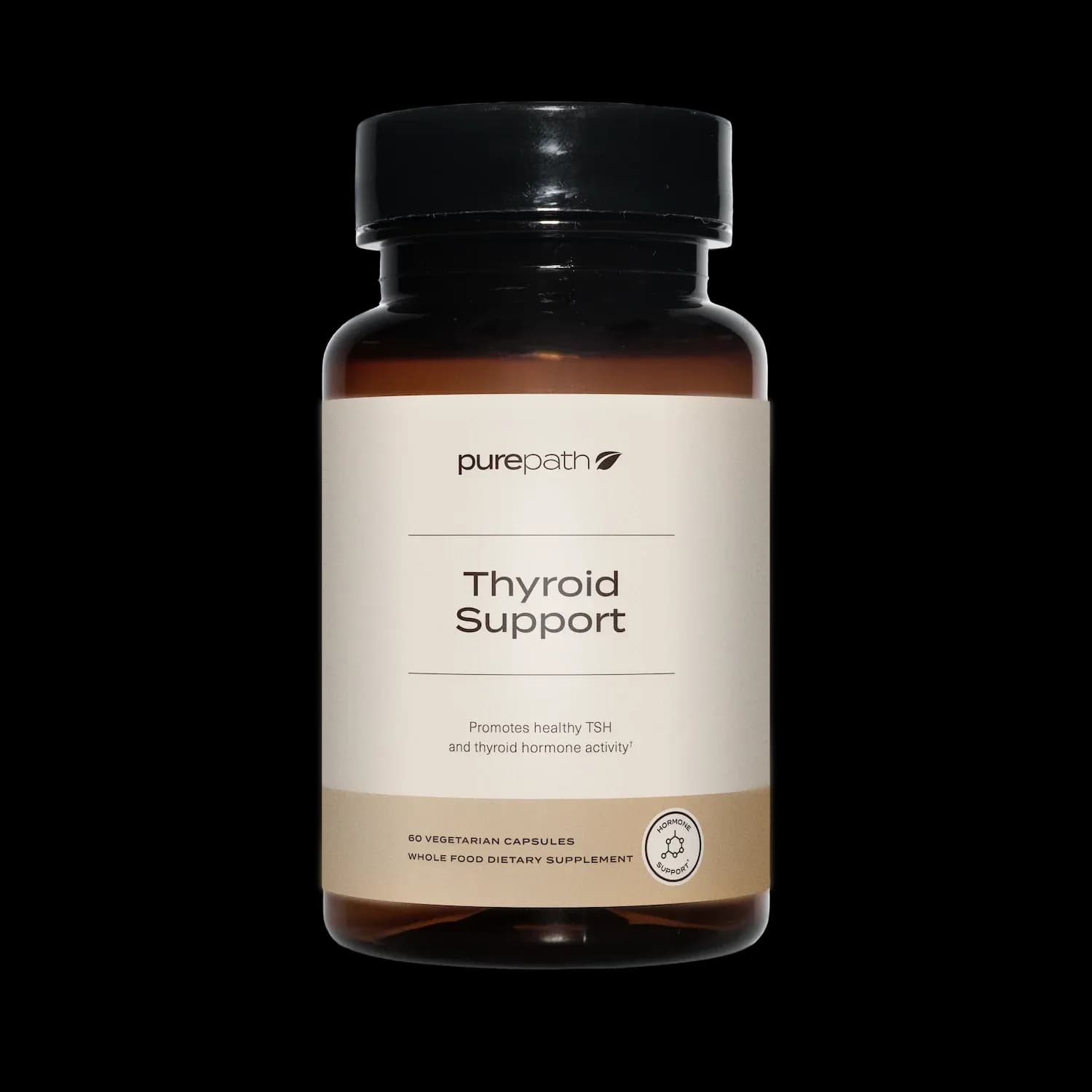
Thyroid Support combines several thyroid-supportive nutrients in one formula: selenium, zinc, copper, and B vitamins, along with myo-inositol, N-acetyl-L-tyrosine (the amino acid precursor for thyroid hormones), and an adaptogenic blend including rhodiola and turmeric. Notably, it's iodine-free—important for autoimmune thyroid conditions where excess iodine can be problematic.
For foundational support, Vitamin D3 + Probiotics combines vitamin D3 with probiotics supporting the gut-thyroid connection. B-Complex provides all eight B vitamins in their active, methylated forms—particularly valuable for those with genetic variations affecting B vitamin metabolism.
Digestion & Detox supports gut health through digestive enzymes and probiotics, addressing one of the key underlying factors in autoimmune thyroid conditions. Since gut health influences thyroid function through multiple pathways, supporting digestive function makes sense as part of a comprehensive approach.
For those dealing with chronic stress impacting thyroid function, adaptogenic support can help maintain healthy cortisol levels. Anti-inflammatory support addresses the chronic inflammation often underlying autoimmune conditions.
What's New in Thyroid Research? (2024-2025 Findings)
Thyroid research continues advancing, with several key developments emerging recently.
The gut-thyroid connection keeps revealing new layers. A 2024 Mendelian randomization study established a causal link between certain gut bacteria and thyroid function—moving beyond correlation to demonstrate that gut health genuinely influences thyroid outcomes.
Environmental toxin research has also matured, providing the mechanistic evidence that transforms "concerning association" into "established pathway of harm." Understanding these pathways helps people make informed choices about reducing exposure.
The fertility connection has gained clinical recognition, acknowledging that thyroid issues are diagnosed more frequently in women experiencing fertility challenges compared to fertile women.
For the large population with subclinical hypothyroidism, research continues refining who benefits from intervention, suggesting that decisions need individualization rather than one-size-fits-all protocols.
Taking Action: Your Thyroid Health Checklist
Understanding your thyroid is step one. Here's how to translate that knowledge into action:
Know the signs. If you're experiencing persistent fatigue, unexplained weight changes, temperature sensitivity, brain fog, mood changes, hair loss, or menstrual irregularities, thyroid dysfunction deserves consideration. Don't dismiss these symptoms as "just stress" or "getting older."
Get comprehensive testing. Request a full thyroid panel including TSH, Free T4, Free T3, and thyroid antibodies—not just TSH alone. If results come back "normal" but you still feel off, discuss optimal versus standard ranges with your healthcare provider. Address the foundations. Optimize sleep, manage stress, support gut health, and ensure adequate nutrition. These factors influence thyroid function regardless of whether you have a diagnosed condition.
Consider targeted support. For those with autoimmune thyroid conditions or seeking optimization, formulas providing selenium, vitamin D, B vitamins, and adaptogenic herbs can complement foundational lifestyle approaches.
Stay current. Thyroid research evolves rapidly. What we understand about optimal ranges, environmental impacts, and supportive approaches continues developing.
Your thyroid may be small, but its influence extends to virtually every system in your body. Understanding this remarkable gland—and supporting its function through nutrition, lifestyle, and targeted supplementation when appropriate—is one of the highest-leverage health investments you can make.
References:
- https://www.thyroid.org/media-main/press-room/
- https://my.clevelandclinic.org/health/body/23188-thyroid
- https://www.ncbi.nlm.nih.gov/books/NBK537039/
- https://www.thyroid.org/thyroid-function-tests/
- https://www.healthcentral.com/condition/thyroid/thyroid-disorders-fertility
- https://www.aafp.org/pubs/afp/issues/2021/0515/p605.html
- https://my.clevelandclinic.org/health/diseases/14129-hyperthyroidism
- https://pmc.ncbi.nlm.nih.gov/articles/PMC9608544/
- https://www.niddk.nih.gov/health-information/diagnostic-tests/thyroid
- https://www.ncbi.nlm.nih.gov/books/NBK448195/
- https://www.thyroid.org/patient-thyroid-information/ct-for-patients/february-2024/vol-17-issue-2-p-5-6/
- https://www.rupahealth.com/post/the-stress-thyroid-link-understanding-the-role-of-cortisol-in-thyroid-function-within-functional-medicine
- https://pmc.ncbi.nlm.nih.gov/articles/PMC8848531/
- https://www.sciencedirect.com/science/article/pii/S0965229925000718
- https://pmc.ncbi.nlm.nih.gov/articles/PMC7973118/
- https://www.frontiersin.org/journals/endocrinology/articles/10.3389/fendo.2023.1200372/full
- https://jme.bioscientifica.com/view/journals/jme/62/1/JME-18-0081.xml
- https://www.ncbi.nlm.nih.gov/pmc/articles/PMC10080082/
- https://journals.sagepub.com/doi/10.1177/03000605211060675
- https://store.maxliving.com/products/purepath-thyroid-support
- https://store.maxliving.com/products/purepath-vitamin-d3
- https://store.maxliving.com/products/purepath-b-complex
- https://store.maxliving.com/products/digestion-detox
- https://maxliving.com/healthy-articles/nutrition/curcumin-a-natural-secret-to-longevity/
- https://www.frontiersin.org/journals/nutrition/articles/10.3389/fnut.2024.1286593/full


 Facebook
 Instagram
 LinkedIn