


Published: June 12, 2026
You know that gummy multivitamin you take every morning? The one with the picture of a sun-drenched orange grove on the label and "natural" splashed across the front in cheerful green letters?
There's a decent chance it began its journey as genetically modified cornstarch in an industrial facility in Shijiazhuang, got hydrogenated with a nickel catalyst at 120°C under 60 atmospheres of pressure, fermented by bacteria, protected with sulfuric acid, oxidized with potassium permanganate, and finally crystallized into the "vitamin C" that landed in your bottle.
That's not a conspiracy theory. That's just how industrial ascorbic acid gets manufactured in the factories producing roughly 110,000 tonnes of it annually. Which raises an awkward question for the 57.6% of American adults popping supplements every month: is the stuff in your capsule actually the same as the vitamin C in an orange?
The short answer is kind of, but not really. Sometimes the molecule itself is chemically identical. But the nutrient matrix surrounding it—the bioflavonoids, polyphenols, enzymes, cofactors, and thousands of phytonutrients that evolved alongside it over millions of years—is completely missing. And a growing mountain of clinical trials suggests that matrix matters way more than the supplement industry has wanted to admit.
Some of the biggest, most expensive vitamin studies ever conducted found that high-dose synthetic supplements didn't just fail to help. They actively caused harm. Meanwhile, whole-food forms of the same nutrients keep showing up on the benefit side of the ledger.
This is the story of why the difference between land-grown and lab-built nutrition isn't marketing hype. It's chemistry, biology, and regulatory loopholes stacked on top of one of the most misunderstood industries in wellness.
Is the Word "Natural" on Supplements Even Regulated?
The global dietary supplement market hit roughly $209 billion in 2024 and is barreling toward $393 billion by 2033. In the United States alone, we're talking about a $68.7 billion industry growing at 8.5% annually. Vitamins are the single biggest ingredient category.
And yet almost nobody taking these products understands the rules they're sold under. Supplements in the U.S. are governed by the Dietary Supplement Health and Education Act of 1994—better known as DSHEA.
Under this law, the FDA regulates supplements as food, not drugs. Manufacturers don't have to prove their products are safe or effective before selling them. The FDA can only act after something goes wrong. When DSHEA passed in 1994, there were roughly 4,000 supplement products on American shelves. Today there are more than 80,000.
Here's the kicker: the word "natural" on your supplement label means absolutely nothing. The FDA has no legal definition of "natural" for food or supplements. Manufacturers slap the term on labels at will.
Third-party verification could theoretically bridge that gap, but almost nobody uses it. Only about 150 products out of roughly 100,000 on the U.S. market carry independent verification. One audit found that actual melatonin content was off by more than 10% in 71% of products tested, with up to 465% variation within a single bottle.
If that's happening with melatonin, the odds your synthetic multivitamin actually contains what the label claims are basically a coin flip.
Can Your Body Tell the Difference Between Synthetic and Natural Vitamins?
For some nutrients, the lab version is chemically indistinguishable from the version that grew in a plant. For others, the differences are dramatic—and measurable in your bloodstream within hours.
Vitamin C is the case where the isolated molecule looks identical. Synthetic L-ascorbic acid has the same atoms arranged in the same order as L-ascorbic acid extracted from an acerola cherry.
But a landmark 2013 review in Nutrients catalogued every comparative bioavailability study of synthetic versus food-derived vitamin C and found something striking: when vitamin C was given alongside its natural flavonoid partners in animal studies, the differences were massive.
Guinea pigs given vitamin C embedded in a citrus matrix showed 148% greater plasma concentration than those given pure ascorbic acid. When co-administered with the flavonoid catechin, animals accumulated 4 to 8 times more vitamin C in their organs.
Human studies found that vitamin C in citrus extract was 35% more bioavailable than synthetic ascorbic acid alone. The mechanism is food chemistry. Bioflavonoids protect ascorbate from oxidation, slow absorption so more reaches tissues, and recycle it back to its active form. Whole oranges contain over 170 different phytochemicals, including more than 60 flavonoids. Your synthetic vitamin C pill contains exactly one.
Your body didn't evolve to recognize isolated ascorbic acid crystals. It evolved to recognize oranges.
Is Natural Vitamin E Actually Better Than Synthetic?
If vitamin C is subtle, vitamin E is glaringly obvious.
Natural vitamin E from sunflower seeds or almonds is a single compound: RRR-alpha-tocopherol. Synthetic vitamin E is an eight-way mixture. When chemists manufacture it from petroleum-derived feedstocks, the reaction produces eight different stereoisomers in equal amounts. Only one of those eight is the RRR form your body uses.
Your liver expresses a protein that selectively grabs natural vitamin E and ignores most synthetic versions. The NIH states this plainly: synthetic vitamin E is only half as biologically active as natural vitamin E, milligram for milligram.
Research using isotope-labeled vitamin E confirmed that the body retains natural vitamin E at twice the rate—the liver preferentially dumps the synthetic stuff into urine.
Then came the nightmare clinical trial.
The SELECT trial, published in JAMA in 2011, enrolled 35,533 men and randomized them to take 400 IU daily of synthetic vitamin E or placebo. The trial was stopped early when the vitamin E group showed a 17% increased risk of prostate cancer—11 extra cancer cases per 1,000 men over seven years.
Nobody's done an equivalent trial with natural vitamin E from food. The SELECT disaster used synthetic, high-dose, single-stereoisomer vitamin E in a racemic mixture the body literally excretes.
Does the MTHFR Gene Affect How You Process Folic Acid?
B vitamins are where genetics meets synthetic supplementation—and things get complicated.
Natural folates exist in your body as 5-methyltetrahydrofolate (5-MTHF)—the active form your cells use. Synthetic folic acid has zero biological activity until your body converts it through multiple steps requiring the MTHFR enzyme.
The problem: 40-60% of Americans carry at least one copy of the MTHFR C677T variant, which reduces enzyme activity. For people with two copies, function drops to 30% of normal.

Research shows that 5-MTHF produces higher plasma folate than equivalent folic acid regardless of MTHFR genotype, completely bypassing the enzyme bottleneck.
Here's the honest counterpoint: the CDC explicitly states that people with MTHFR variants have blood folate only 16% lower when taking folic acid, and synthetic folic acid is the only form clinically proven to prevent neural tube defects—a massive public health victory.
The takeaway: for many adults with MTHFR variants or baseline deficiencies, methylated forms deliver measurably more active folate per milligram.
Vitamin B12 follows the same pattern. Cheap multivitamins use cyanocobalamin—a cobalamin molecule attached to a cyanide group. Your body cleaves the cyanide off and converts what remains to active forms before it works.
Studies comparing forms found that while absorption rates are similar, the body excretes cyanocobalamin in urine at triple the rate of methylcobalamin and stores 13% more total cobalamin when given the methylated form.
Can Synthetic Supplements Increase Your Cancer Risk?
The most sobering evidence comes from the largest supplement trials ever conducted—studies that enrolled tens of thousands of people and followed them for decades.
The CARET trial published in the New England Journal of Medicine, enrolled 18,314 smokers and asbestos-exposed workers and gave them 30 mg of synthetic beta-carotene plus vitamin A daily. The trial was stopped 21 months early because the active-treatment group had a 28% increase in lung cancer and 17% increase in all-cause mortality.
A Finnish trial found an 18% increase in lung cancer among male smokers taking synthetic beta-carotene. A meta-analysis pooling 109,394 participants confirmed the harm signal.
Here's what should make you sit up straight: dietary beta-carotene from carrots, sweet potatoes, and leafy greens has never shown this harm. Food-sourced carotenoids consistently track with reduced cancer risk.
The difference isn't the molecule—beta-carotene is beta-carotene. The difference is that food delivers it alongside 600+ other carotenoids and polyphenols that buffer its effects. Isolate it at high dose in a pill, and you create a biochemical imbalance cells don't know how to manage.
A massive 2012 Cochrane review pooled 78 randomized trials with 296,707 participants and found that antioxidant supplements significantly increased mortality risk. When restricted to high-quality trials, the increase was even larger. Specific culprits: synthetic vitamin A, beta-carotene, and synthetic vitamin E.
The U.S. Preventive Services Task Force reviewed 84 studies with 739,803 participants and issued a "D" recommendation—meaning they recommend against—using beta-carotene or vitamin E to prevent disease.
But it's not uniformly bad news. The COSMOS-Mind trial showed that daily multivitamins improved cognition in older adults—equivalent to slowing brain aging by three years. These used conventional multivitamins at moderate doses.
The pattern: isolated, high-dose synthetic nutrients show harm signals. Moderate-dose broad-spectrum multivitamins show modest benefits. And for virtually every nutrient studied, getting it from food beats getting it from a pill.
Are Calcium and Vitamin D Supplements Actually Good for You?
The Multi-Ethnic Study of Atherosclerosis followed 5,448 adults over a decade and found something striking: calcium from food protected against coronary artery calcification, while calcium from supplements was associated with increased arterial calcification.
When you eat calcium in sardines or yogurt, it's absorbed slowly alongside magnesium, vitamin K2, and phosphorus that direct it into bone. When you swallow 1,000 mg of calcium carbonate at once, you spike serum calcium that can't fully park in bones—and some calcifies arteries instead.
A 2024 analysis in Diabetes Care following 434,000 adults found that habitual calcium supplement use was associated with higher cardiovascular mortality in people with diabetes.
Vitamin D offers a clearer split. Research comparing D2 and D3 found that 2,000 IU daily of D3 raised blood vitamin D from 41.5 to 88.0 nmol/L over eight weeks, while D2 at the same dose actually lowered existing vitamin D levels. A meta-analysis confirmed D3 raises serum vitamin D an average of 15.23 nmol/L more than D2.
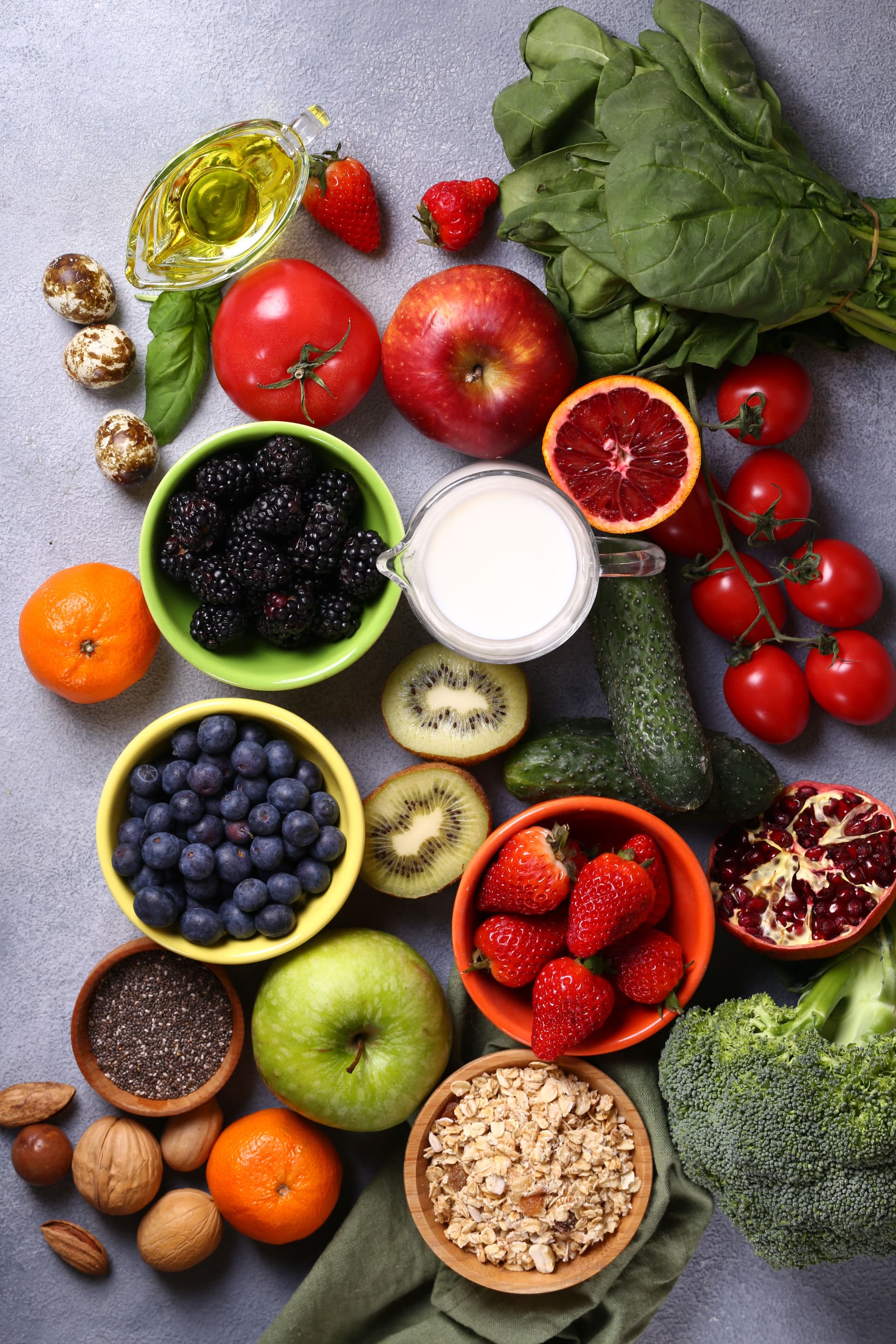
If you remember one substitution: always choose D3 over D2.
Where Are Your Vitamins Actually Manufactured?
Walk into the factory where your multivitamin originates and you won't find farms. You'll find chemical refineries.
Synthetic vitamin C starts with corn that gets enzymatically broken down, hydrogenated at 120°C and 60 atmospheres of pressure using nickel catalysts, fermented by bacteria, protected with sulfuric acid, oxidized with potassium permanganate, and crystallized. Vitamin E synthesis uses petroleum-derived compounds in solvent baths.
The geographic reality: over 78% of all U.S. vitamin imports come from China, including 91% of vitamin C, 94% of B6, and 62% of vitamin E.

When you buy a "natural" multivitamin at a big-box store, the overwhelming odds are its active ingredients were synthesized in Chinese chemical plants, shipped across the Pacific, and repackaged with meadow imagery.
Whole-food supplements follow a different playbook. Instead of synthesizing isolated nutrients, manufacturers concentrate actual food through low-temperature drying or fermentation. Acerola cherries supply vitamin C still attached to its bioflavonoids. Sunflower seeds supply natural vitamin E with its cofactors intact. The finished product contains not just the headline vitamin but hundreds of compounds that accompany it in nature.
Why Can't Any Supplement Replicate What Whole Food Does?
The deeper reason whole-food nutrition outperforms isolated supplementation isn't any single vitamin. It's informational density.
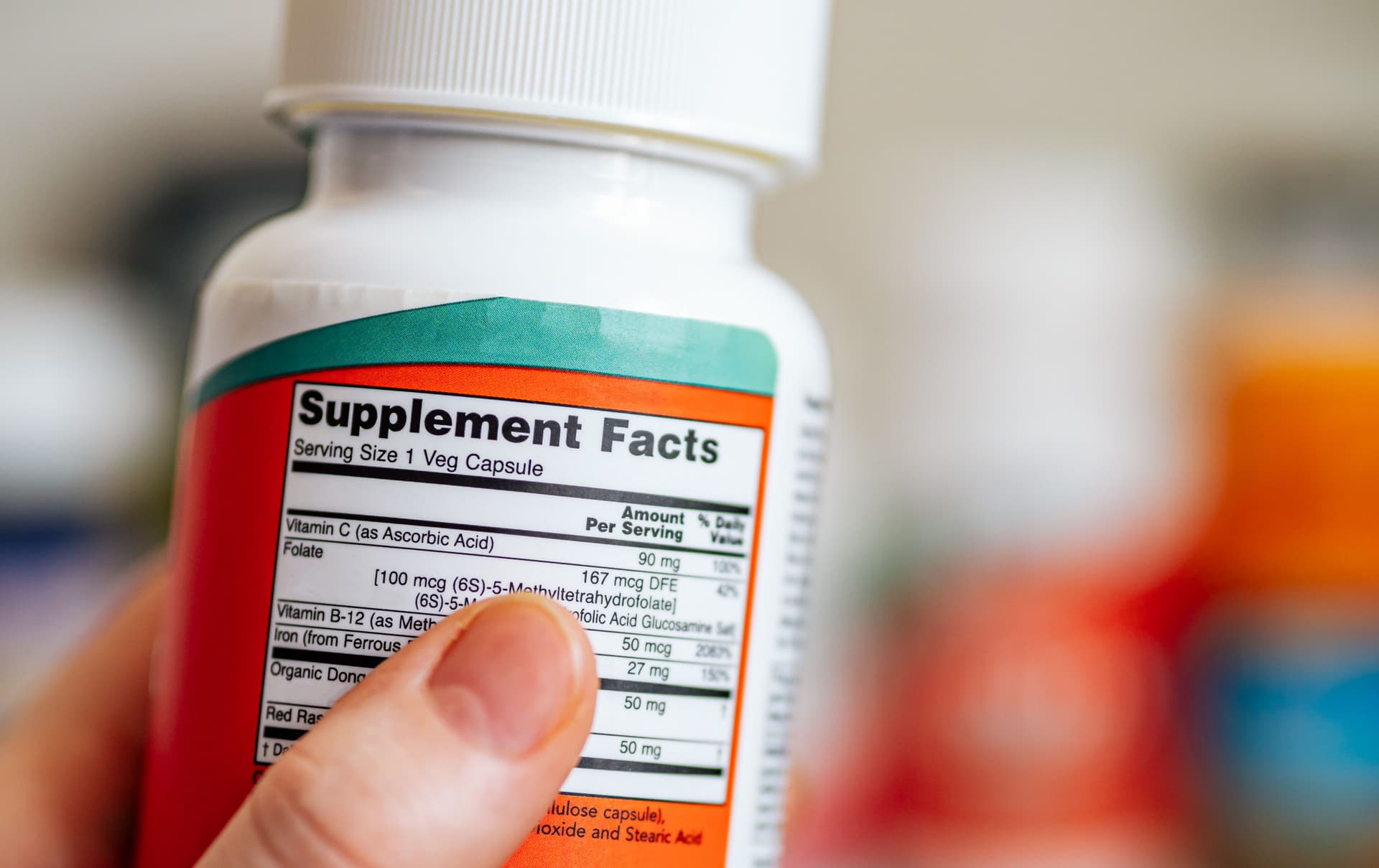
Scientists have identified more than 10,000 distinct phytonutrients in plants. These compounds interact in networks a Supplement Facts panel can't capture. Vitamin C is stabilized by flavonoids. Vitamin E tocopherols work alongside tocotrienols and carotenoids. Calcium needs K2, magnesium, and vitamin D to reach bone instead of arteries. Folate shares pathways with B12, B6, and choline.

Your body spent thousands of years learning to process oranges and almonds—entire food matrices with thousands of compounds in evolutionary-tested ratios. When you swallow lab-synthesized fragments, you're asking cells to run software they weren't programmed for.
How Do You Choose a High-Quality Supplement? (What to Actually Look For)
For people not eating ten servings of organic vegetables daily—realistically most of us—some practical principles emerge:
1. Prioritize whole food first, always. Every major medical institution says supplements exist to fill gaps, not replace food. Clinical trials overwhelmingly show better outcomes from dietary nutrients.
2. When you supplement, choose active forms. Methylfolate over folic acid. Methylcobalamin over cyanocobalamin. D3 over D2. Mixed tocopherols or d-alpha-tocopherol over dl-alpha-tocopherol. These are the forms your body evolved to use.
3. Avoid isolated high-dose antioxidants. The CARET, ATBC, and SELECT trials make this non-negotiable, especially for smokers. Megadosing synthetic beta-carotene or vitamin E has no evidence of benefit and concerning evidence of harm.
4. Avoid isolated high-dose antioxidants. The CARET, ATBC, and SELECT trials make this non-negotiable, especially for smokers. Megadosing synthetic beta-carotene or vitamin E has no evidence of benefit and concerning evidence of harm.
5. Look for third-party verification. USP, NSF, or ConsumerLab certification catches the wild quality gaps documented in supplement audits.
6. Read the "other ingredients" line. Titanium dioxide (banned in Europe), artificial colors, and excessive fillers signal cost-first manufacturing.
MaxLiving's approach aligns with these principles, positioning supplements as exactly what the name suggests: supplementary to whole foods, movement, stress management, quality sleep, and minimizing toxins.
Our Foundational 3 pack combines omega-3s, probiotics, and a whole-food multivitamin addressing the most common nutritional gaps. For targeted support, they offer Men's Multi and Women's Multi with gender-specific nutrient dosing. You can explore their comprehensive selection of whole-food supplements formulated around ingredients your body actually recognizes.
The Verdict: Your Cells Know the Difference
Synthetic vitamins aren't poison. For specific therapeutic applications—injectable B12 for pernicious anemia, high-dose folic acid preventing neural tube defects, therapeutic D3 for severe deficiency—they're life-saving.
But synthetic isolation comes with measurable costs that show up in clinical outcomes.
Your liver excretes synthetic vitamin E at twice the rate of natural forms. Your arteries calcify more with supplemental calcium than dietary calcium. Your lungs developed more cancer in two massive trials given high-dose synthetic beta-carotene, while dietary carotenoids show protective effects. Your methylation runs smoother on active 5-MTHF if you carry MTHFR variants. The food matrix delivers hundreds of cofactors isolated pills can't replicate.
The supplement industry has built a $209 billion empire on regulatory ambiguity, slapping "natural" labels on petrochemical derivatives while the FDA never defined the term. It's grown to 100,000+ products with only 150 carrying independent verification.

It sources 78% of American vitamins from Chinese chemical plants while marketing them with Vermont farm imagery.
The way forward isn't supplement abstinence. It's supplement literacy.
Choose food first, every time you can. When you can't—because you're legitimately deficient, your diet has gaps, modern agriculture stripped nutrients from soil, or you have genetic variants affecting metabolism—choose supplements starting as food or using bioactive forms your body evolved to recognize.
Be deeply skeptical of isolated, high-dose, single-nutrient antioxidants promising to prevent diseases that the largest clinical trials ever conducted couldn't show they prevent. Your body spent thousands of years learning to extract nutrition from whole foods. The research keeps showing that the closer your supplement mimics that whole-food matrix, the better your cells respond.
The land-versus-lab question isn't about aesthetics or marketing vibes. It's about whether you're giving your body molecular information it knows how to process—or chemical fragments it's never encountered in evolutionary history.
The clinical trials have answered that question. Your cells know the difference, even when your brain doesn't.
References:
- https://pmc.ncbi.nlm.nih.gov/articles/PMC4299797/
- https://www.cdc.gov/nchs/products/databriefs/db399.htm
- https://www.grandviewresearch.com/industry-analysis/dietary-supplements-market-report
- https://www.fda.gov/food/information-consumers-using-dietary-supplements/questions-and-answers-dietary-supplements
- https://www.quality-supplements.org/why-usp-verified-matters
- https://pmc.ncbi.nlm.nih.gov/articles/PMC3847730/
- https://ods.od.nih.gov/factsheets/VitaminE-HealthProfessional/
- https://www.sciencedirect.com/science/article/pii/S0002916523182621
- https://pubmed.ncbi.nlm.nih.gov/21990298/
- https://pubmed.ncbi.nlm.nih.gov/35999905/
- https://pmc.ncbi.nlm.nih.gov/articles/PMC11435031/
- https://www.cdc.gov/folic-acid/data-research/mthfr/index.html
- https://pmc.ncbi.nlm.nih.gov/articles/PMC8311243/
- https://www.fredhutch.org/en/research/divisions/public-health-sciences-division/research/cancer-prevention/carotene-and-retinol-efficacy-trial/about-caret.html
- https://acsjournals.onlinelibrary.wiley.com/doi/full/10.1002/cncr.23527
- https://www.cochranelibrary.com/cdsr/doi/10.1002/14651858.CD007176.pub2/abstract
- https://pubmed.ncbi.nlm.nih.gov/35727271/
- https://pubmed.ncbi.nlm.nih.gov/36102337/
- https://www.ahajournals.org/doi/10.1161/jaha.116.003815
- https://diabetesjournals.org/care/article/47/2/199/151370/Associations-of-Habitual-Calcium-Supplementation
- https://pubmed.ncbi.nlm.nih.gov/24001747/
- https://pubmed.ncbi.nlm.nih.gov/22552031/
- https://www.chemanalyst.com/NewsAndDeals/NewsDetails/vitamin-c-production-industrial-process-inputs-technologies-and-sustainability-outlook-38452
- https://www.agtechnavigator.com/Article/2024/04/17/china-dominance-us-told-to-invest-in-vitamin-production/


 Facebook
 Instagram
 LinkedIn